




Ramps
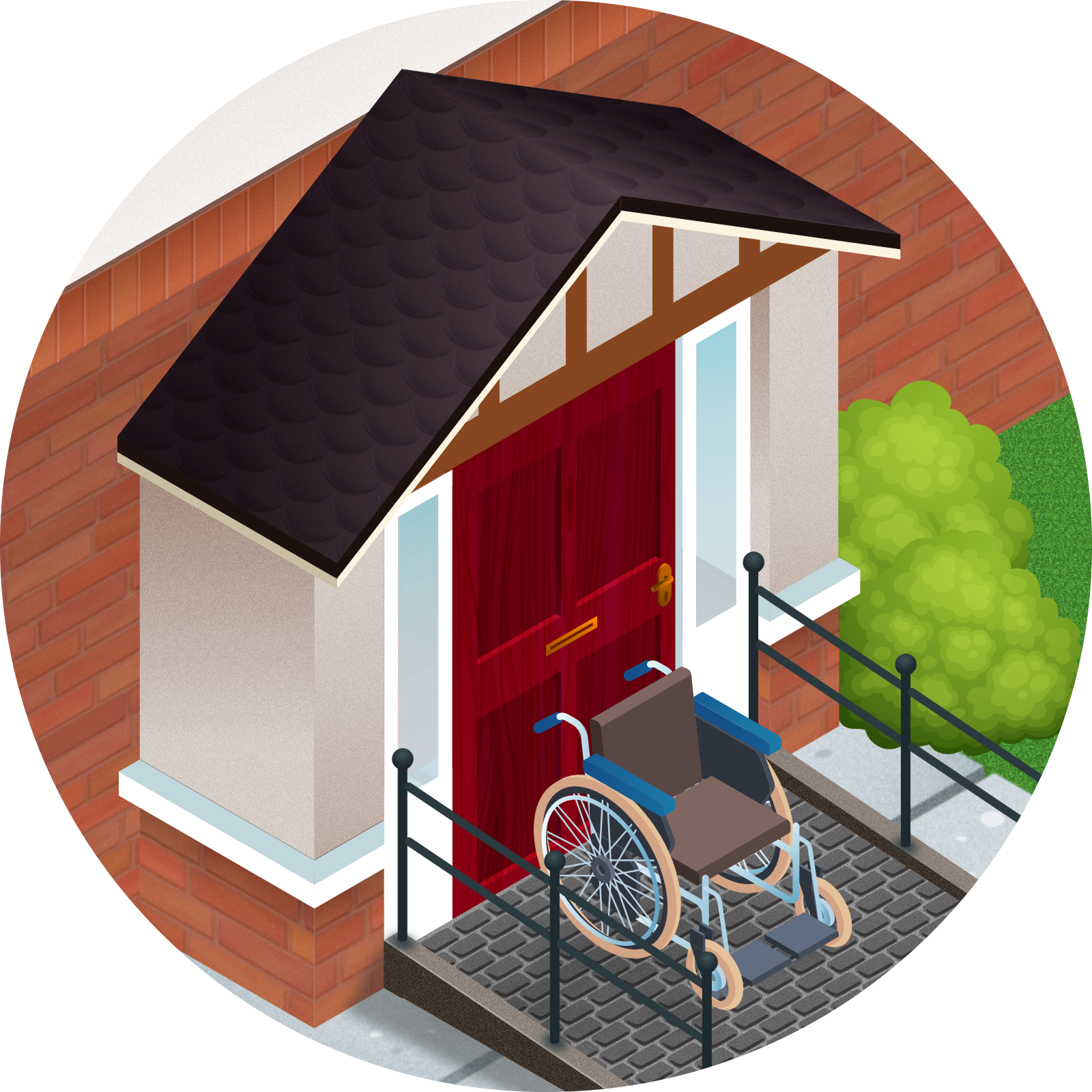
Planning: Adding a permanent wheelchair ramp for access to a home is likely to require planning permission as it will change the external appearance of the front of the house. If the application is solely for improving disable access to the building, then the planning application will be exempt from a fee.
Fold away and moveable ramps which are designed to be temporary are unlikely to require planning permission.
All permanent wheelchair ramps must comply with Approved Document M and K of the building regulations which specify standards for accessibility and protection from falling.
The gradient of a ramp should be no more than 1:12, with rest platforms of at least 1200mm in length. Handrails should be installed at specified heights.
Doorway widening
Widening or creating a new external doorway will likely fall under permitted development rights, meaning an application for planning permission is not required provided you meet limits and conditions set out in legislation. If the change is on the side or rear of the building, it is more likely to not require an application for planning permission.
Widening doorways, both internal and external, must comply with building regulations as they may impact the structure of a building.
Read more in the doors and windows common project.
New ground floor accommodation and toilet
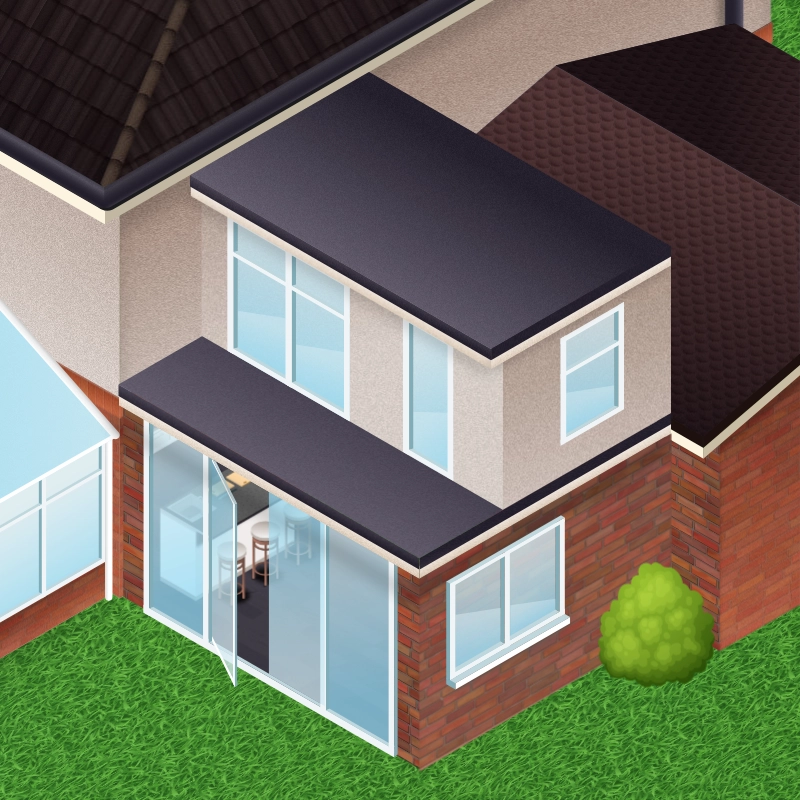
Creating new ground floor accommodation and toilet facilities will likely require an extension to be built. The creation of an extension is classed as permitted development, meaning an application for planning permission is not required provided certain limits and conditions are met. Full details around the limits and conditions are available on our single-storey or two-storey extension mini guides.
Whether the change is being made for accessibility or otherwise, the same planning and building regulation rules will apply.


.png)